Every year, when November arrives, the roads of Michoacán fill with color and memory. Among candles, offerings, and the scent of copal, a flower rises as a symbol of love and reunion: the cempasúchil. Its story is as ancient as it is profound, and its presence lights up the Day of the Dead with the same intensity with which the sun touches the earth.
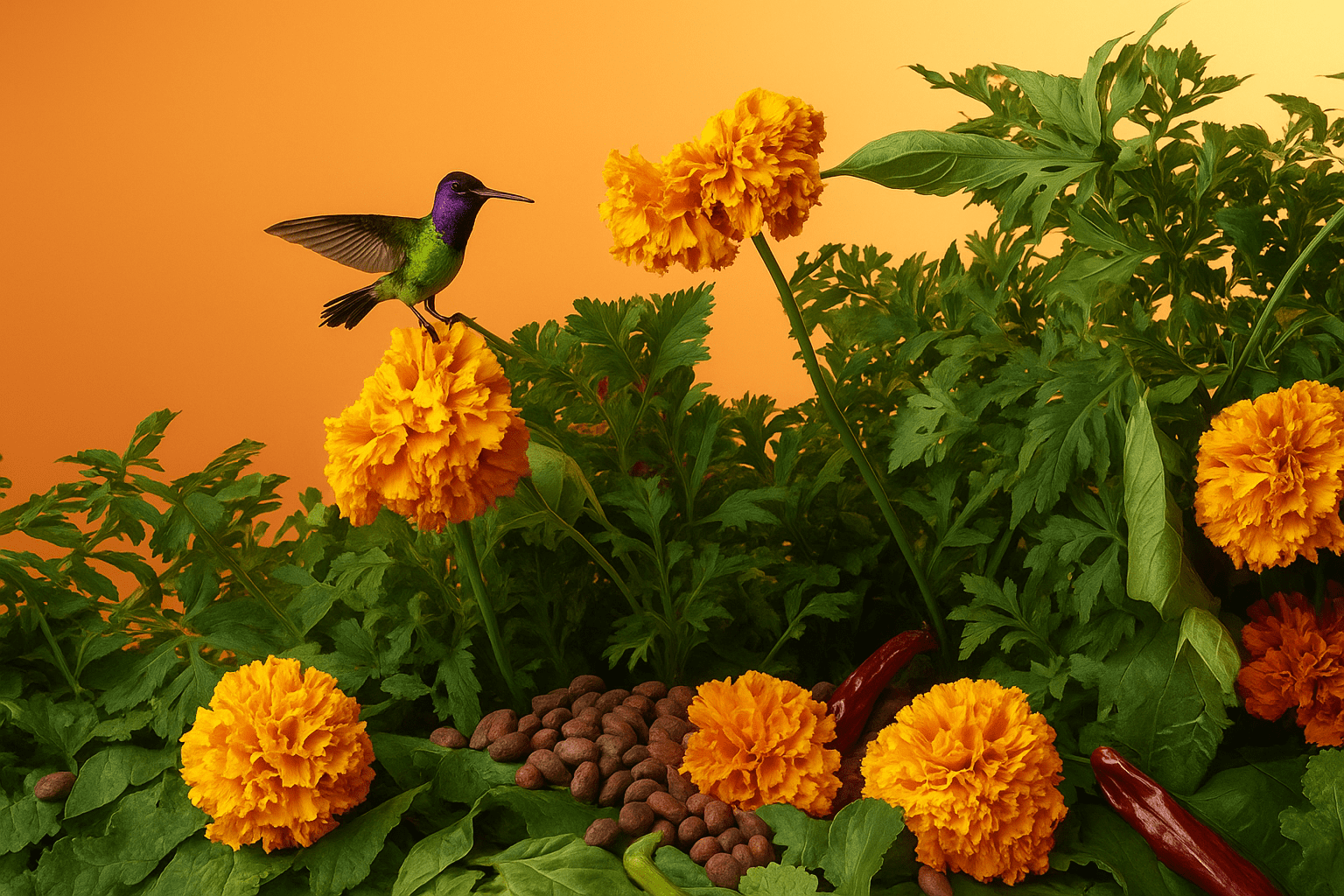
The cempasúchil flower, with its bright orange petals and strong fragrance, is one of the most recognized symbols of the Day of the Dead in Mexico. Its history goes back to pre-Hispanic times, when the Mexica and other indigenous cultures believed that the cempasúchil had a special connection with the afterlife. According to legend, the flower was born from the love of two young people, Xóchitl and Huitzilin, who were devoted to the sun god Tonatiuh. When Huitzilin died in battle, Xóchitl prayed to Tonatiuh to reunite with her beloved. The god, moved by her sorrow, transformed her into a cempasúchil flower. When a hummingbird, believed to be Huitzilin’s spirit, touched its petals, the flower bloomed with the light of the sun, symbolizing eternal love and the union between life and death.
In the state of Michoacán, the cempasúchil plays a central role in the celebration of Día de Muertos. During these days, families decorate altars and tombs with the flower, believing that its color and scent guide the souls of their loved ones back to the world of the living. The intense orange of its petals is said to represent the sun, which was considered the source of life and the bridge between this world and the next. Paths made of cempasúchil petals are often laid from the entrance of the home to the altar, helping the spirits find their way.
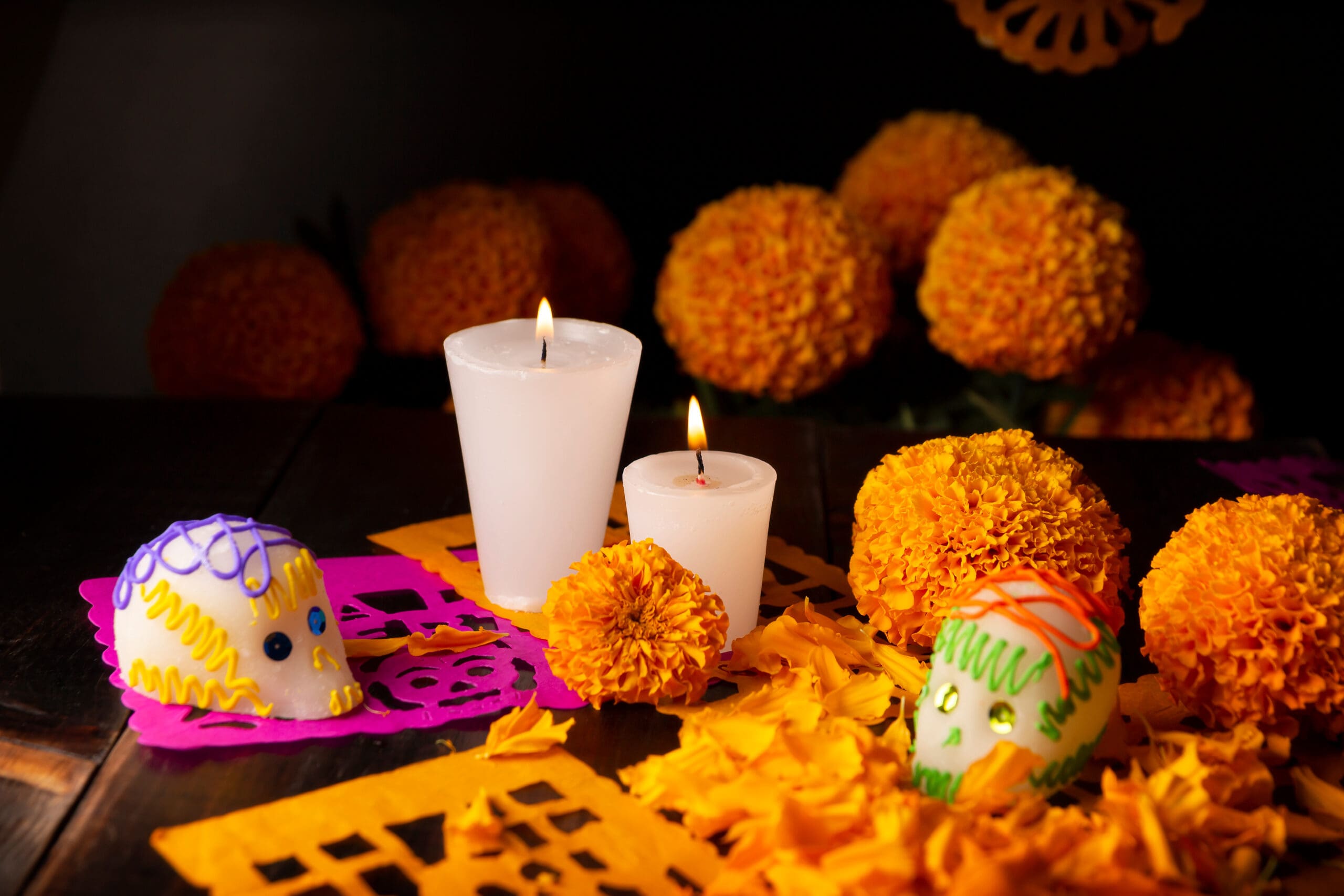
In towns around Lake Pátzcuaro, where the Day of the Dead has deep Purépecha roots, the flower becomes part of a breathtaking landscape. Markets fill with mountains of cempasúchil, and entire fields bloom with gold as the festival approaches. During the night of the 1st of November, families gather in cemeteries, lighting candles and placing cempasúchil arrangements on graves. The air fills with the scent of the flower, blending with incense, copal, and the sound of prayers and songs.
Beyond its beauty, the cempasúchil represents memory and continuity. It reminds the people of Michoacán, and all of Mexico, that death is not an end but a transformation. Through its petals, the living honor those who came before them, celebrating their lives with light, color, and love. The cempasúchil, born from ancient myth and kept alive through tradition, continues to bloom each year as a bridge between worlds and as the heart of the Day of the Dead.
Don’t miss the chance to see Noche de Muertos in Michoacán. Marvel at the vibrant cempasúchil, lively altars, and timeless traditions. Contact me now to book your unforgettable visit, there’s still time!
Carlos.